How To Dress For Your Body Type
A practical step-by-step guide to how to dress for your body type, including preparation, instructions, common issues, tips, and next steps.
How To Dress For Your Body Type
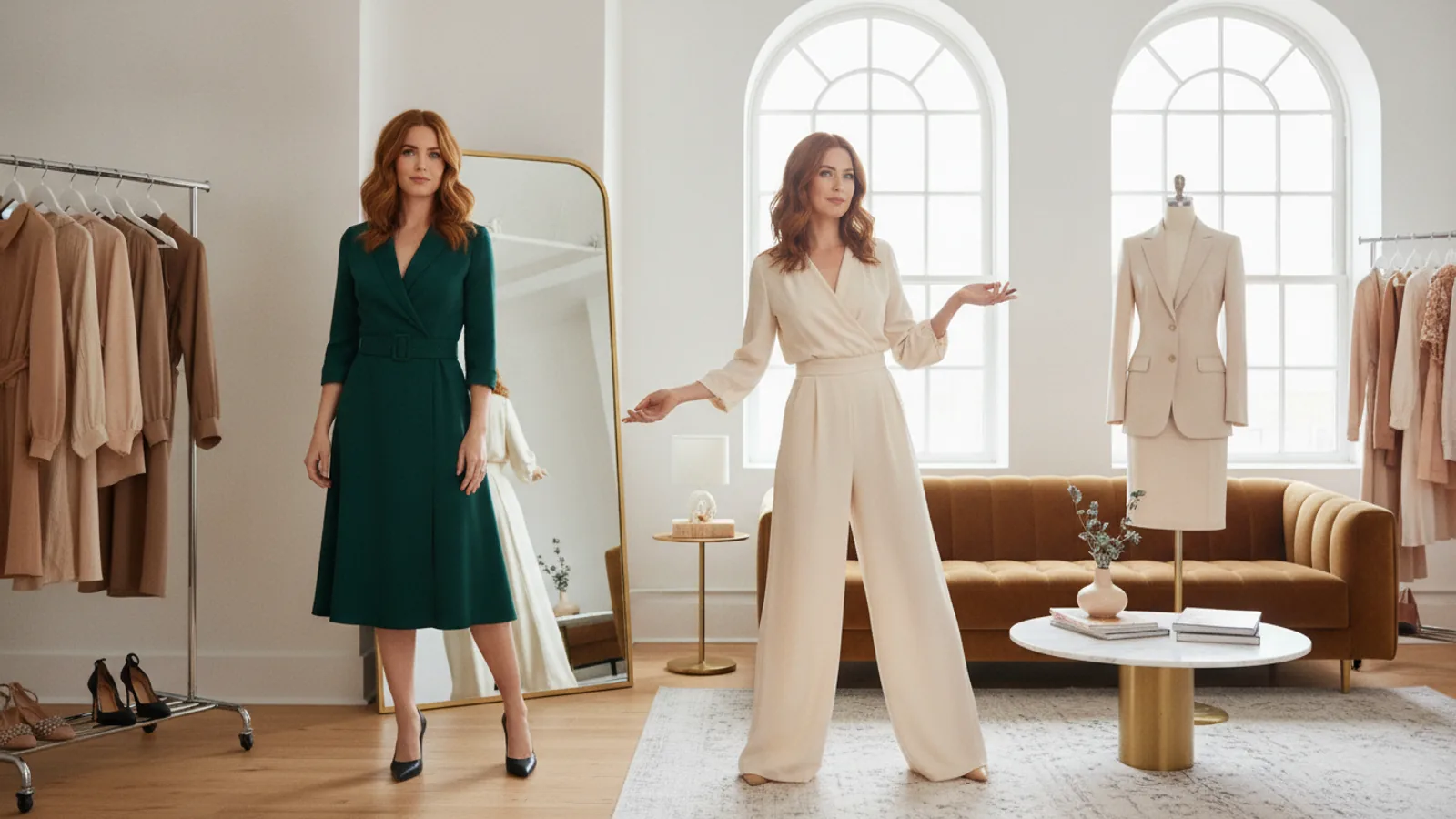
Learning how to dress for your body type is less about following rigid rules and more about understanding your unique proportions. This guide helps you identify your shape and choose clothing silhouettes that flatter your frame, balance your proportions, and ultimately, make you feel confident and polished. It’s a tool for celebrating your figure, not concealing it, empowering you to build a wardrobe that truly works for you.
Fast Answer
- Key Action: Measure your shoulders, bust, waist, and hips to identify your proportions.
- Core Principle: Use clothing to create visual balance, often by adding volume where you are narrower and creating definition.
- Primary Goal: Select silhouettes that highlight the features you love most and make you feel comfortable and chic.
Before You Start
Gathering a few simple tools and adopting the right mindset is the first step towards a more intuitive and enjoyable dressing experience. This process is a personal exploration, not a test.
- A flexible tailor's measuring tape. This is essential for accurate measurements.
- A full-length mirror. You’ll need to see your entire silhouette clearly.
- A notebook and pen or a notes app on your phone. To jot down your measurements and observations.
- Form-fitting clothing. Wear something minimal like a camisole and leggings to ensure the tape measure is against your body.
- An open and positive mindset. This is the most important requirement. Be kind to yourself.
Step-by-Step Instructions
Take Your Key Measurements
The foundation of understanding your shape lies in four key measurements. Stand in front of your mirror, relaxed and with your feet together. Ensure the measuring tape is held parallel to the floor for the most accurate readings.
- Shoulders: Ask a friend to help if possible. Measure from the tip of one shoulder all the way across to the other. If you're alone, you can estimate this by measuring the front of your shoulders from one bony point to the other.
- Bust: Wrap the tape measure around the fullest part of your bust. It should be snug, but not so tight that it compresses your chest.
- Waist: Measure around the narrowest part of your natural waist, which is typically an inch or two above your belly button. If you bend to the side, the crease that forms is your natural waist.
- Hips: Stand with your feet directly beneath your hips. Wrap the tape measure around the widest part of your hips and bottom.
Write these four numbers down. They are the data points you'll use to analyse your proportions in the next step.
Identify Your Proportions
Now, look at the numbers you've written down. You're not looking at the numbers themselves, but at the relationship between them. This comparison is what defines your silhouette. Ask yourself these questions:
- Are my shoulder and hip measurements roughly the same (within 5%)?
- Is my waist significantly smaller than my bust and hips (at least 25% smaller than your shoulder or hip measurement)?
- Are my shoulders noticeably wider than my hips?
- Are my hips noticeably wider than my shoulders?
- Are my shoulder, bust, and hip measurements all quite similar, with little waist definition?
Your answers will point you toward one of the common body shapes. For example, if your hips are significantly wider than your shoulders, you likely have Pear proportions. If your shoulders, bust, and hips are all very similar, you're looking at a Rectangle shape.
Determine Your Primary Body Shape
Based on your proportions, you can identify your primary body shape. Here are the five most common types, described in neutral, geometric terms. See which one resonates most with your measurements and overall silhouette.
- Pear (or Triangle): Your hips are wider than your bust and shoulders. Your waist is well-defined and often one of your best features. Weight tends to be gained on the bottom, thighs, and hips.
- Inverted Triangle: Your shoulders and/or bust are wider than your hips. You may have a strong shoulder line and a narrower lower body.
- Rectangle (or Straight): Your shoulder, bust, and hip measurements are all very similar. You have a straight silhouette with little waist definition.
- Apple (or Round): You are generally well-proportioned, but your waist is undefined and the least defined part of your body. You may have a fuller bust and midsection with slimmer legs and arms.
- Hourglass: Your shoulder and hip measurements are very similar, and you have a clearly defined, narrow waist. Your figure is naturally balanced and curvy.
Understand the Principle of Balance
Regardless of your shape, the core principle of dressing is to create visual balance. Think of your body as a canvas. You can use clothing, colour, pattern, and texture to draw the eye where you want it to go and create a harmonious, pleasing silhouette.
Often, this means creating the illusion of an hourglass figure, as it is the most traditionally balanced shape. However, this is not a strict rule. The goal is to create proportions that feel right to you.
This is achieved by either adding or taking away volume. For example:
- A Pear shape might add volume to the top half (e.g., with puffed sleeves or a statement necklace) to balance wider hips.
- An Inverted Triangle shape might add volume to the bottom half (e.g., with an A-line skirt or wide-leg trousers) to balance broader shoulders.
This single principle is more important than any specific clothing recommendation.
Select Silhouettes for a Pear Shape (Triangle)
Your goal is to highlight your defined waist and add volume to your upper body to balance your wider hips.
- Tops: Look for details that broaden your shoulders and draw the eye upward. Boat necks, cowl necks, and off-the-shoulder styles are excellent. Statement sleeves, like puff or cap sleeves, add width. Patterns and bright colours on your top half are also your friend.
- Trousers & Skirts: Opt for darker, solid colours on your bottom half. Straight-leg, bootcut, or gently flared trousers create a long, lean line. A-line skirts that skim over your hips without clinging are incredibly flattering.
- Dresses: Fit-and-flare and A-line dresses are your hero silhouettes. They cinch in at your narrow waist and flare out over your hips beautifully. Wrap dresses also work well to highlight your waist.
- Jackets: Choose structured blazers and cropped jackets that stop at your waist. This draws attention to your slimmest point.
Select Silhouettes for an Inverted Triangle Shape
Here, the aim is to soften your shoulder line and add volume and width to your lower body to create balance.
- Tops: Keep your top half clean and simple. V-necks, scoop necks, and halter necks are fantastic as they draw the eye inwards and down, breaking up the width of your shoulders. Opt for soft, drapey fabrics over stiff, structured ones. Avoid shoulder pads and fussy details like epaulettes.
- Trousers & Skirts: This is where you can have fun! Go for volume, prints, and bright colours. Wide-leg trousers, culottes, palazzos, and flared jeans are all superb choices. A-line, pleated, and full circle skirts add necessary volume to your lower half.
- Dresses: Look for dresses with A-line or full skirts. A peplum detail at the waist can also create the illusion of wider hips.
- Jackets: Softer, unstructured jackets work better than sharp, tailored blazers. A simple, longline cardigan can be very elegant.
Select Silhouettes for a Rectangle Shape (Straight)
Your goal is to create the illusion of a waist and add curves to your silhouette.
- Tops: Look for tops that add volume to both the bust and hip areas. Peplum tops are made for you. Details like ruffles, pleats, and pockets on the bust are great. Scoop necks and sweetheart necklines can add softness.
- Trousers & Skirts: You can wear almost any style, but those that add volume are best. Try trousers with side pockets or pleats. Full skirts, A-line skirts, and bubble skirts all help create a curvier lower body.
- Dresses: Fit-and-flare dresses create an instant hourglass shape. Empire-line dresses and belted shirt dresses are also excellent for creating waist definition.
- Jackets & Belts: A belt is your most powerful accessory. Use it to cinch in the waist of dresses, jackets, and even oversized shirts. Structured, tailored blazers that nip in at the waist will also create curves.
Select Silhouettes for an Apple Shape (Round)
The focus here is on elongating the torso, creating the illusion of a waist, and showing off your often-slender legs.
- Tops: V-necks and deep scoop necks are your best friends, as they draw the eye vertically and create a longer, leaner-looking torso. Look for tops that drape and skim over your midsection rather than cling to it. Empire-line tops, which are fitted under the bust and then flow outwards, are very flattering.
- Trousers & Skirts: Highlight your legs! Slim-fit, straight-leg, or flared trousers all work well. Avoid pleated or bulky styles around the waist. A simple, flat-fronted A-line or straight skirt is a good choice.
- Dresses: Shift dresses, empire-waist dresses, and A-line styles are ideal. A well-cut wrap dress in a soft, jersey fabric can also be very effective at creating a waistline.
- Jackets: Opt for single-breasted, longline jackets and cardigans that are left open. This creates two long vertical lines down your body, which has a powerful elongating effect.
Select Silhouettes for an Hourglass Shape
Your figure is already balanced, so your goal is simple: highlight your curves and maintain that balance, with a special focus on defining your waist.
- Tops: Fitted and structured tops are key. Wrap tops, belted blouses, and form-fitting knits will all look fantastic. V-necks, scoop necks, and sweetheart necklines are great for flattering your bust.
- Trousers & Skirts: High-waisted styles are made for you. Wide-leg or flared trousers that start from a fitted waist look incredible. A classic pencil skirt is a must-have for highlighting your hip-to-waist ratio.
- Dresses: Follow your curves. Bodycon dresses, wrap dresses, and belted shirt dresses will all celebrate your shape. Avoid shapeless, boxy styles like shift dresses, which will hide your waist and make you look larger than you are.
- Jackets: Belted trench coats and tailored blazers that nip in at the waist are perfect for maintaining your defined silhouette.
Quick Reference
| Situation | Use this | Why |
|---|---|---|
| To create or define a waist | A quality belt, a wrap dress, high-waisted trousers | These pieces physically cinch in at your natural waist, creating a focal point and an hourglass curve. |
| To balance wider hips (Pear) | Statement tops, puff sleeves, a colourful scarf | These details draw the eye upward and add volume to your narrower top half, creating a balanced look. |
| To balance broader shoulders (Inverted Triangle) | A-line skirts, wide-leg trousers, peplum hems | These add volume and visual weight to your lower body, creating symmetry with your shoulders. |
| To add curves to a straight figure (Rectangle) | Peplum tops, fit-and-flare dresses, layering | These elements build shape and create the illusion of a smaller waist and curvier hips. |
| To elongate the torso (Apple) | V-neck tops, open longline jackets, monochrome outfits | These create strong vertical lines that draw the eye up and down, making your torso appear longer and leaner. |
Common Problems When You Dress For Your Body Type
| Problem: "I don't seem to fit into any single category." | Solution: This is incredibly common. Instead of focusing on a label, focus on your individual features. Do you want to highlight your legs? Define your waist? Minimise your bust? Dress for these specific goals. Cherry-pick advice from the different shape categories that applies to your unique proportions. |
|---|---|
| Problem: "The 'rules' feel too restrictive and don't match my personal style." | Solution: Treat these as guidelines, not gospel. They are a starting point to help you understand what works, but personal style and confidence trump everything. If you're a Pear shape who adores patterned trousers, wear them! Just balance them with a simple, well-fitting top. It's about making informed choices, not limiting yourself. |
| Problem: "My body shape changes with weight fluctuations." | Solution: Build your wardrobe around versatile, adaptable pieces. Wrap dresses, belted items, knitwear with good stretch, and elasticated-waist trousers are forgiving and can adapt with you. Re-measure yourself periodically, but focus more on how clothes feel than on sticking to a label. A well-fitting garment is always the priority. |
Advanced Tips for Dressing For Your Body Type
- Master Fabric and Texture: Fabric choice is just as important as silhouette. Structured fabrics like denim, corduroy, and tailored wool can create shape where there is none. Soft, drapey fabrics like jersey, silk, and viscose will skim your curves. Use texture (like a chunky knit) to add volume where you want it.
- Consider Vertical Proportions: Are you long-legged with a shorter torso, or vice versa? If you have shorter legs, wearing high-waisted trousers and shoes that match your skin tone or trouser colour will create an unbroken, elongated line. If you have a shorter torso, avoid high-waisted styles that can make you look unbalanced; opt for a mid-rise instead.
- Use Colour and Print Strategically: Darker colours recede, and lighter/brighter colours advance. Wear darker shades on areas you want to de-emphasise and brighter colours or bold prints on areas you want to highlight. This is a powerful tool for balancing proportions.
- Accessorise with Intention: Accessories can transform an outfit and direct focus. A statement necklace draws attention to your face and décolletage. A fantastic belt instantly creates a waist. Eye-catching shoes will draw the eye downwards, which can be useful for balancing a top-heavy figure.
How To Dress For Your Body Type FAQ
Can your body type change over time?
Yes, absolutely. Life events like pregnancy, menopause, and changes in your fitness level or weight can all alter your proportions. It’s a good idea to retake your measurements every few years or whenever you feel your clothes are no longer fitting as they used to.
What if I'm petite or tall? How does that affect the advice?
Height adds another layer. If you are petite (typically 5'4" and under), your main goal is often to elongate your frame. Stick to smaller-scale prints, monochromatic colour schemes, and be wary of voluminous styles that can overwhelm you. If you are tall, you can carry off larger prints, bold colours, and more dramatic silhouettes with ease. Your challenge might be finding pieces with long enough sleeves or inseams.
Should I completely avoid trends that don't "suit" my body type?
Not at all. The key is to adapt trends to work for you. For example, if oversized blazers are in vogue and you have an Inverted Triangle shape, choose one in a soft, unstructured fabric without shoulder pads. If low-rise jeans make a comeback and you have a Pear shape, pair them with a longer top that skims your hips to maintain a flattering line.
Is there a "best" or "ideal" body type?
No. Every body type is beautiful. The goal of this process is not to change your body or to strive for a different shape. It is to understand and appreciate the one you have, and to use clothing as a tool to express your personal style with confidence.
Final Checklist for Dressing For Your Body Type
- You have taken your shoulder, bust, waist, and hip measurements accurately.
- You have identified the body shape archetype that most closely matches your proportions.
- You understand the core principle of using clothing to create visual balance.
- You have a mental list of 3-4 key silhouettes (e.g., A-line skirt, wrap top) that are likely to flatter your shape.
- You have reviewed your existing wardrobe to see which pieces already align with these principles.
- You feel empowered to treat this as a creative guide, not a restrictive set of rules.
- You are ready to experiment, have fun with fashion, and focus on what makes you feel great.